
Let It Go
How the Empire Boys Changed Clothes but Never Lost their Appetite for Africa
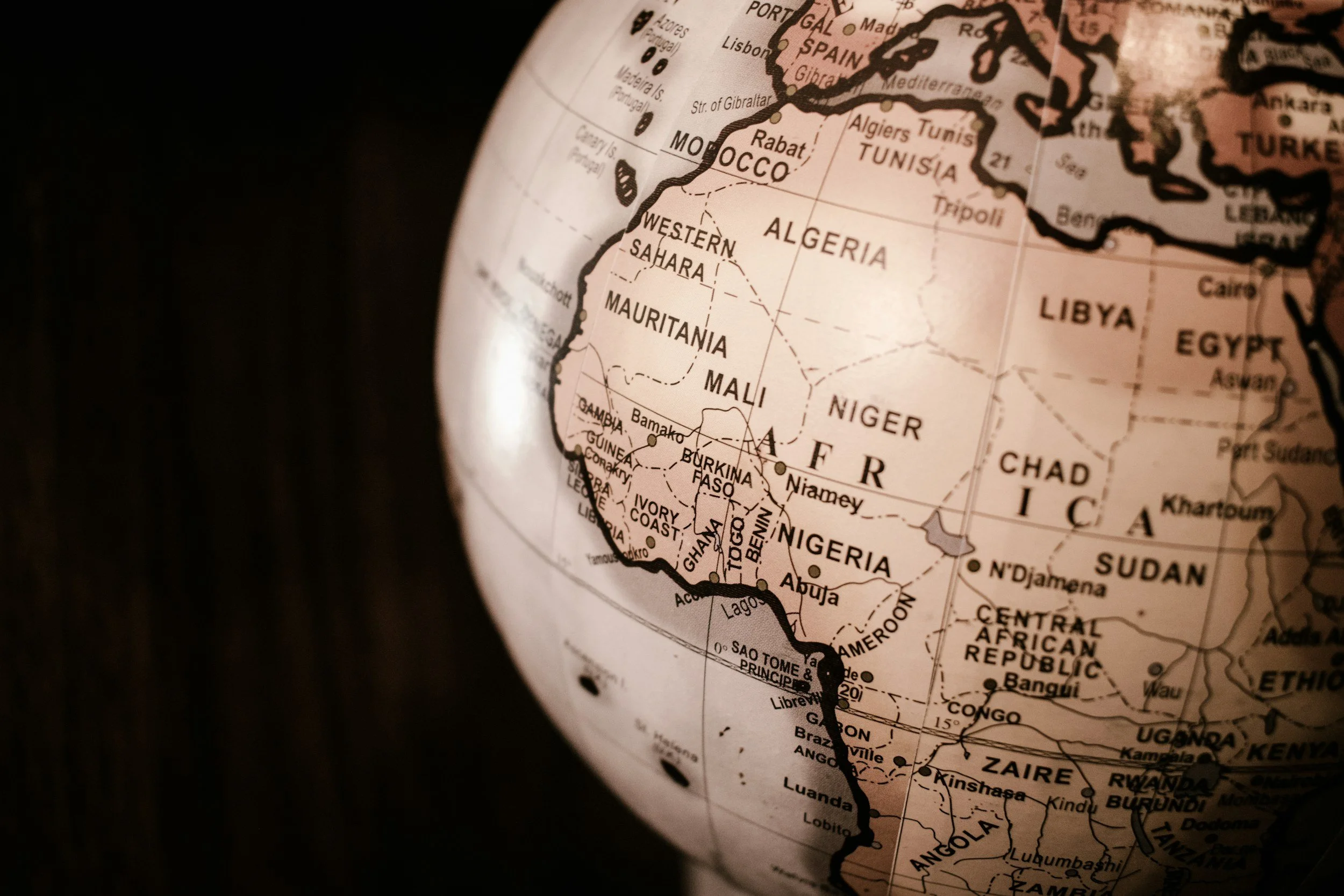
Let It Go, Man
The Genie Is Out of the Bottle, and the Empire Boys Still Cannot Walk Away from Africa.
At some point, somebody should have told the empire boys, the colonizers, to leave well enough alone.
They could have traded. They could have negotiated. They could have met African societies as political communities with their own institutions, markets, knowledge systems, spiritual orders, trade routes, laws, elders, rulers, farmers, miners, diplomats, and memory.
But the empire boys rarely know how to leave value alone.
Portugal came first through the Atlantic door. Later, Britain, France, Belgium, Spain, Germany, Italy, and settler-colonial South Africa in Namibia followed through their own doors of appetite. Earlier Dutch, Danish, and other European trading and settlement systems helped build the older coastal and Atlantic architecture. They came for gold, labor, land, ports, rivers, crops, minerals, routes, and strategic geography. They told themselves stories about civilization, order, religion, commerce, and progress.
But beneath the story was the structure.
They wanted control.
The First Mistake
The original mistake was not contact. Human beings have always traveled, traded, learned, borrowed, argued, married, and exchanged across distance. African societies were not sealed off from the world. They were part of the world.
The mistake was domination.
Instead of relationship, the empire boys chose capture. Instead of trade, they chose coercion. Instead of respecting African authority, they tried to replace it. Instead of learning from African knowledge, they dismissed Africa until they needed her. Instead of doing business with people, they turned people into business.
That is where the irony begins.
The imperial powers thought they were making Africa dependent. In many ways, they did. They tore societies apart, redirected economies, carved borders, weakened institutions, and trained export systems to serve outside demand.
But they also made themselves dependent.
They trained their banks to expect African wealth. Their ports to expect African commodities. Their factories to expect African inputs. Their consumers to expect cheap sweetness, cheap rubber, cheap minerals, cheap oil, cheap labor, and cheap silence. Their armies and diplomats learned to see African geography as strategic ground.
They not only trapped Africa inside the empire.
They trapped themselves inside appetite.
They Left, But Not Really
By the middle of the twentieth century, direct colonial rule had become too expensive, too unstable, and too embarrassing to maintain.
African people resisted. Workers organized. Students marched. Farmers refused. Newspapers circulated. Churches, mosques, unions, parties, families, and local communities carried memory into action. Leaders like Nkrumah understood that the flag was not enough. Political power had to become institutional power.
World War II weakened Europe. The United Nations changed the language of legitimacy. The Cold War made open colonialism dangerous. The old empires saw the problem clearly: formal empire was costing too much.
So they let go.
Or at least they appeared to.
Britain let go in stages. France let go in waves. Belgium rushed out of Congo after helping weaken the very institutions that would have had to govern after departure. Portugal resisted until liberation wars and revolution at home made empire impossible. Spain, Italy, Germany, and South Africa each left their own marks, delays, withdrawals, and unfinished questions.
The flags changed. The governors left. Anthems were written. Seats opened at the United Nations. New constitutions appeared.
But the deeper structure did not simply disappear.
The old powers gave up ownership and tried to keep access.
They let go of the flag but tried to keep the currency. They let go of the governor but tried to keep the military agreement. They let go of the colony but tried to keep the mine. They let go of the capital city but tried to keep the port, railway, cocoa contract, oil concession, banking relationship, language system, diplomatic vote, and friendly elite.
That was not full departure.
That was empire changing clothes.
The Cold War Bottle
The Cold War gave the old appetite a new bottle.
Now the language was no longer openly colonial. It was anti-communism, development, stability, modernization, security, and alignment.
But the question underneath remained familiar: who controls African direction, resources, corridors, government access, and the right to define order?
The United States, the Soviet Union, former European empires, corporations, banks, intelligence systems, and military planners entered the newly independent African field with their own maps, security interests, ideological claims, and, often enough, hands reaching toward resources. Some came with aid. Some came with weapons. Some came with advisors. Some came with loans. Some came with ideology. Some came with contracts.
Africa had won formal independence, but independence became the new arena of struggle.
This is what Nkrumah saw. This is what Lumumba saw. Political independence could be contained if economic, military, financial, and narrative power remained outside African hands.
The political kingdom had been entered.
The structural kingdom was still contested.
May 19, 2026
Now here we are.
May 19, 2026.
The language has changed again.
Now the world says critical minerals. Cobalt. Copper. Lithium. Rare earths. Uranium. Oil. Gas. Ports. Rail corridors. Undersea cables. Data centers, including Microsoft and UAE-based G42’s delayed Kenya project. Logistics routes. Food systems. Security partnerships.
China is there. Russia is there. The United States is there. France is still there in altered form: Macron was in Kenya in May 2026, using the Africa Forward Summit to frame France’s renewed Africa strategy around investment, clean energy, AI, infrastructure, and equal-partnership language, with reporting describing roughly $27 billion in mobilized commitments. Britain is there through finance, diplomacy, and business networks. The UAE is there, in places you can see, and in places you cannot: in visible port, logistics, investment, and critical-minerals channels, and in contested security allegations connected to Sudan, including Reuters reporting that Sudan's army accused the UAE and Ethiopia of involvement in drone attacks while the UAE denied supplying arms. Turkey is there. India is there. Europe is there. Corporations are there. Development banks are there. Private security interests are there.
Everybody has a reason.
Everybody has a proposal.
Everybody has a partnership language.
But Africa has heard many languages before.
The old structure has not vanished. It has been updated.
The slave ship became the plantation. The plantation became the colony. The colony became the concession. The concession became the development agreement. The development agreement became the corridor. The corridor became the critical minerals strategy.
Different bottle.
Same genie.
Let It Go, Man
That is the pointed irony.
They could have just traded.
They could have respected African sovereignty from the beginning. They could have met African people as people, African rulers as rulers, African institutions as institutions, African memory as knowledge, and African land as place, not inventory.
But the empire boys wanted more than exchange. Boys will be boys; they wanted to command.
Then command became costly.
Then departure became necessary.
Then departure became impossible.
Because the same resources that drew them in were still there. The same geography mattered. The same labor systems mattered. The same ports mattered. The same minerals mattered. The same desire to control the movement of African value remained.
So the old imperial world and the new competing powers are stuck in a quagmire of their own making. They cannot rule Africa the old way. They cannot ignore Africa in the new world. They cannot fully control African states. They cannot fully walk away from African resources.
That is the joke history is telling on empire.
A tired and fed-up uncle might put it better:
“Let it go, man. Just let it go.”
You broke into the house, rearranged the furniture, stole the silver, damaged the foundation, left when repairs got expensive, and now you keep coming back asking if I trust you to live in the basement. No! Go! Let it go, man!
Three Questions for the Countries Chasing African Resources
First: if your country says it wants partnership with Africa, will it accept African ownership, African processing, African labor standards, African environmental authority, and African pricing power even when those terms reduce your profit, slow your supply chain, or weaken your strategic advantage?
Second: if your country says it wants stability in Africa, will it stop treating African governments as corridors to minerals, ports, votes, military access, and alignment, and instead support institutions that allow African people to decide how land, labor, memory, technology, and resources should serve life?
Third: if your country says this is no longer colonialism, will it submit its deals to public scrutiny, disclose who benefits, identify who bears the risk, and prove that the agreement strengthens African sovereignty rather than dressing old extraction in the language of partnership?
What is important and unseen?
What is important and unseen is that the empire boys did not only damage African societies. They also built institutions in the colonizing world that became dependent on African extraction: banks, ports, insurance markets, navies, corporations, manufacturers, universities, consumers, militaries, and foreign-policy systems.
Those organizations still carry the old appetite in modern form. The structure that must change is not Africa’s existence as a resource-rich continent. The structure that must change is the global system’s insistence that African value must move through corridors someone else can control.
One last time, let’s say it together: “Let it go, man. Just let it go.”
References
U.S. Department of State, Office of the Historian, “Decolonization of Asia and Africa, 1945–1960.”
United Nations, “Declaration on the Granting of Independence to Colonial Countries and Peoples,” 1960.
Associated Press, “Macron faces backlash after interrupting Africa summit panel in Kenya,” May 2026.
Associated Press, “Africa secures major clean energy deals as France deepens investment push,” May 2026.
Reuters, “US agency, consortium sign $553 million loan for Angola railway revamp,” Dec. 17, 2025.
Reuters, “Trains through Angola’s Lobito critical mineral corridor suspended by floods,” Apr. 12, 2026.
Microsoft, “Microsoft and G42 announce $1 billion comprehensive digital ecosystem initiative for Kenya,” May 22, 2024; Reuters, “Microsoft’s African data center falters over payment demands, Bloomberg News reports,” May 10, 2026.
Reuters, “Sudan army says UAE and Ethiopia linked to Khartoum airport drone attack,” May 2026; Reuters, “UAE denies involvement in Sudan airport attack,” May 2026.