
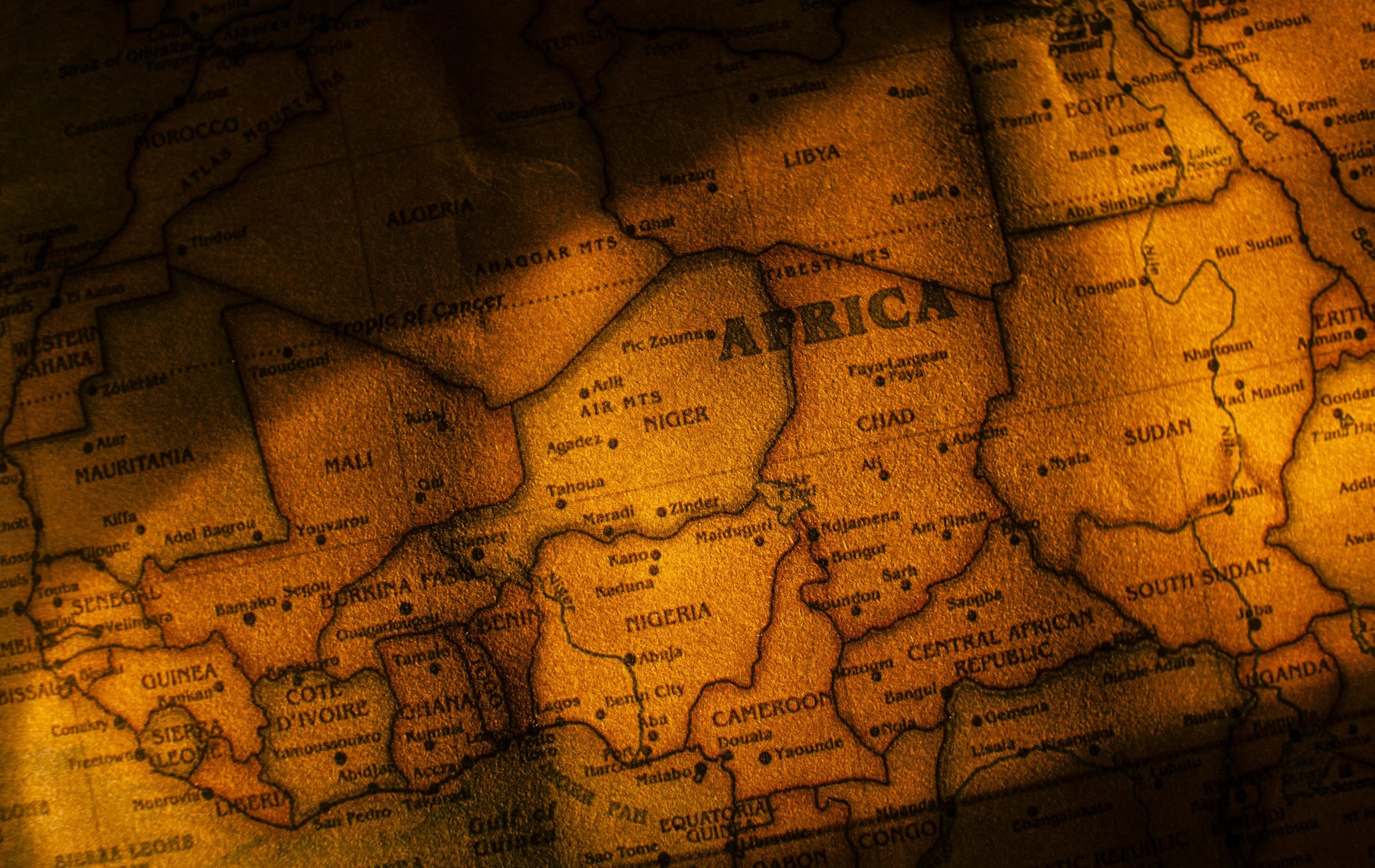
Africa 2063
Africa 2063
Africa Is Building the Machinery
The important question around Agenda 2063 is beginning to change.
For years, the easy question was whether African governments could agree on a continental vision.
They did.
Now comes the harder part:
Can Africa build the machinery necessary to exercise continental power?
That machinery includes trade systems, payment networks, transportation corridors, mineral processing, digital infrastructure, artificial intelligence, financing institutions, and the ability to measure whether governments are actually delivering what they promised.
The September 2026 signal is therefore not that Agenda 2063 has been achieved.
Not even close.
The signal is that several pieces of continental infrastructure are moving at the same time.
That deserves attention.
African Trade and Payment Sovereignty
Africa has talked about continental integration for generations. The structural test has always been whether Africans can actually move goods, money, people, knowledge, and investment across African borders through African systems.
That work is becoming more concrete.
In August, the African Union joined the World Bank and UNECA in launching Integrating Africa: From Threads to Hubs, a new examination of how stronger regional integration can expand intra-African trade, regional value chains, industrialization, and economic growth.
There is movement in the financial plumbing too.
The Bank of Central African States joined the Pan-African Payment and Settlement System — PAPSS — in July, connecting the six CEMAC countries more directly to the developing continent-wide payment network.
That matters.
A free-trade agreement without transportation, payment, financing, production, and market infrastructure is paperwork.
Continental integration becomes power when an African producer can make something in one African country, sell it in another, receive payment efficiently, finance expansion, and keep more of the value inside African economies.
What to Watch
Watch whether AfCFTA increasingly produces:
- functioning regional value chains;
- easier cross-border payments;
- more African manufacturing;
- lower non-tariff barriers;
- greater participation by small and medium-sized African businesses;
- and measurable increases in trade conducted through African institutions.
The treaty matters.
The transaction matters more.
AI, Data, and Digital Sovereignty
Artificial intelligence has now entered the Agenda 2063 implementation system itself.
In August 2026, the African Union completed another training program teaching government representatives how to use AI for monitoring and reporting on the Second Ten-Year Implementation Plan.
Twenty AU member states have now participated in the initiative.
That may sound administrative.
It is not.
A continent that can collect its own data, measure its own progress, identify implementation failures, and build its own analytical capacity is strengthening the institutional machinery required for self-government.
The African Union has also adopted a Continental Artificial Intelligence Strategy emphasizing African-centered development, responsible AI, infrastructure, skills, research capacity, ethical governance, and data sovereignty.
But there is a second question Freedom School students should learn to ask:
Who owns the infrastructure underneath the intelligence?
Cloud systems, computing capacity, platforms, training data, broadband networks, algorithms, and digital identities can become instruments of sovereignty—or new infrastructure for dependency.
Africa does not simply need access to the digital future.
Africa needs meaningful power inside it.
What to Watch
Watch:
- African-owned computing capacity;
- African research institutions;
- data-governance laws;
- local AI companies;
- African-language AI;
- cybersecurity;
- public digital infrastructure;
- who controls cloud and data-center capacity;
- and whether international partnerships transfer capability or merely rent it.
The computer can be new while the dependency is old.
Critical Minerals — From Resource Wealth to Industrial Power
The global energy transition has placed Africa near the center of another great economic contest.
Cobalt.
Copper.
Lithium.
Graphite.
Manganese.
Platinum-group metals.
Rare earth elements.
The world increasingly needs resources found in Africa to build batteries, electric vehicles, renewable-energy systems, electronics, defense technologies, and the infrastructure of the digital economy.
Africa has seen this movie before.
The question is whether the ending changes.
The African Union's African Green Minerals Strategy explicitly calls for moving beyond the export of raw minerals toward processing, value addition, regional industrialization, technological capability, jobs, and stronger African mineral value chains.
Work continued in 2026 toward an Africa Critical Minerals Programme aligned with those goals.
That is the structural battle.
Finding minerals does not automatically create sovereignty.
Where the mineral becomes valuable matters.
If Africa mines the material while somebody else refines it, finances it, manufactures with it, patents the technology, controls the market, and captures most of the profit, extraction has simply learned twenty-first-century vocabulary.
What to Watch
Do not only follow new mines.
Follow:
- refineries;
- battery plants;
- mineral-processing facilities;
- African ownership;
- local-content requirements;
- technology transfer;
- regional industrial corridors;
- contract transparency;
- environmental consequences;
- and how much value remains where the resource originated.
The real question is not:
Who has the mineral?
It is:
Who controls the value chain?
African Growth and the Financing Problem
Africa's economic story remains more complicated than either the crisis narrative or the celebration narrative suggests.
The African Development Bank projects continental economic growth of approximately 4.2 percent in 2026, with many African economies growing considerably faster.
That matters.
But growth alone does not answer the sovereignty question.
The Bank also estimates that Africa faces an annual development-financing gap exceeding $1.3 trillion if the continent is to meet its broader development objectives.
Debt-service pressures, expensive external borrowing, infrastructure needs, fragmented financial markets, and dependence on outside capital continue to restrict what governments can do.
That means Africa 2063 is also a financial-governance project.
A continent may possess minerals, workers, markets, land, energy, entrepreneurs, and growing economies—and still surrender significant decision-making power if somebody else controls the capital required to develop them.
What to Watch
Watch whether Africa builds stronger:
- domestic capital markets;
- African financial institutions;
- tax and revenue systems;
- regional development finance;
- diaspora investment channels;
- sovereign credit capacity;
- African payment systems;
- and mechanisms that reduce dependence on expensive external borrowing.
Money does not merely finance development.
Money determines who gets to make decisions about development.
Student Question of the Month
Imagine Africa in 2063 with abundant minerals, advanced technology, large markets, and modern infrastructure.
Now ask:
Who owns it? Who governs it? Who finances it? Who processes the resources? Who controls the data? And where does the value go?
Those questions separate development from sovereignty.
Diaspora Connection
Africa 2063 matters to Black people outside Africa because the future of Africa will influence the future of the entire Black world.
Africa's minerals help power global technology.
Its culture shapes the world.
Its young population will increasingly influence global labor, innovation, markets, migration, education, and politics.
Its states will matter more in international institutions.
Its digital systems will help determine who controls African knowledge and African data.
And its ability to build strong continental institutions will help determine whether Africa negotiates with the world primarily as a collection of resource-producing states—or as an increasingly coordinated center of global power.
The diaspora should therefore follow Agenda 2063 not as distant African news.
We should follow it as Black future infrastructure.
What Is Unseen?
What is unseen is that Africa's struggle for sovereignty is increasingly moving away from the old battlefield.
The new terrain is the value chain.
Who processes the mineral?
Who clears the payment?
Who finances the project?
Who owns the data?
Who controls the cloud?
Who operates the corridor?
Who writes the trade rule?
Who measures success?
Those questions may sound technical.
They are questions of power.
The old extraction system often removed African resources physically.
The next one could leave the resources, the buildings, the fiber cables, and even the data centers in Africa while placing control somewhere else.
Africa 2063 therefore requires more than African participation.
It requires African institutional capacity, African negotiating power, and increasing African control over the systems that turn African value into global wealth.
Predictive Trajectory
If AfCFTA, PAPSS, regional value chains, African mineral strategy, AI governance, digital infrastructure, and continental financing institutions continue developing together, Africa could gradually shift from fragmented participation in global systems toward greater continental bargaining power.
But the opposite trajectory remains possible.
Infrastructure without ownership can reproduce dependency.
Growth without value capture can reproduce extraction.
Technology without data sovereignty can reproduce external control.
And continental plans without implementation can become very handsome documents sitting quietly on very expensive shelves.
What We Need to Do
Students and families should learn to stop asking only whether Africa is “developing.”
Ask the stronger questions:
Who owns?
Who governs?
Who finances?
Who benefits?
What African institution carries the power?
And does the structure being built today leave Africa with more choices tomorrow?
That is how Freedom School Academy will follow the road to 2063.