

The Modern African World
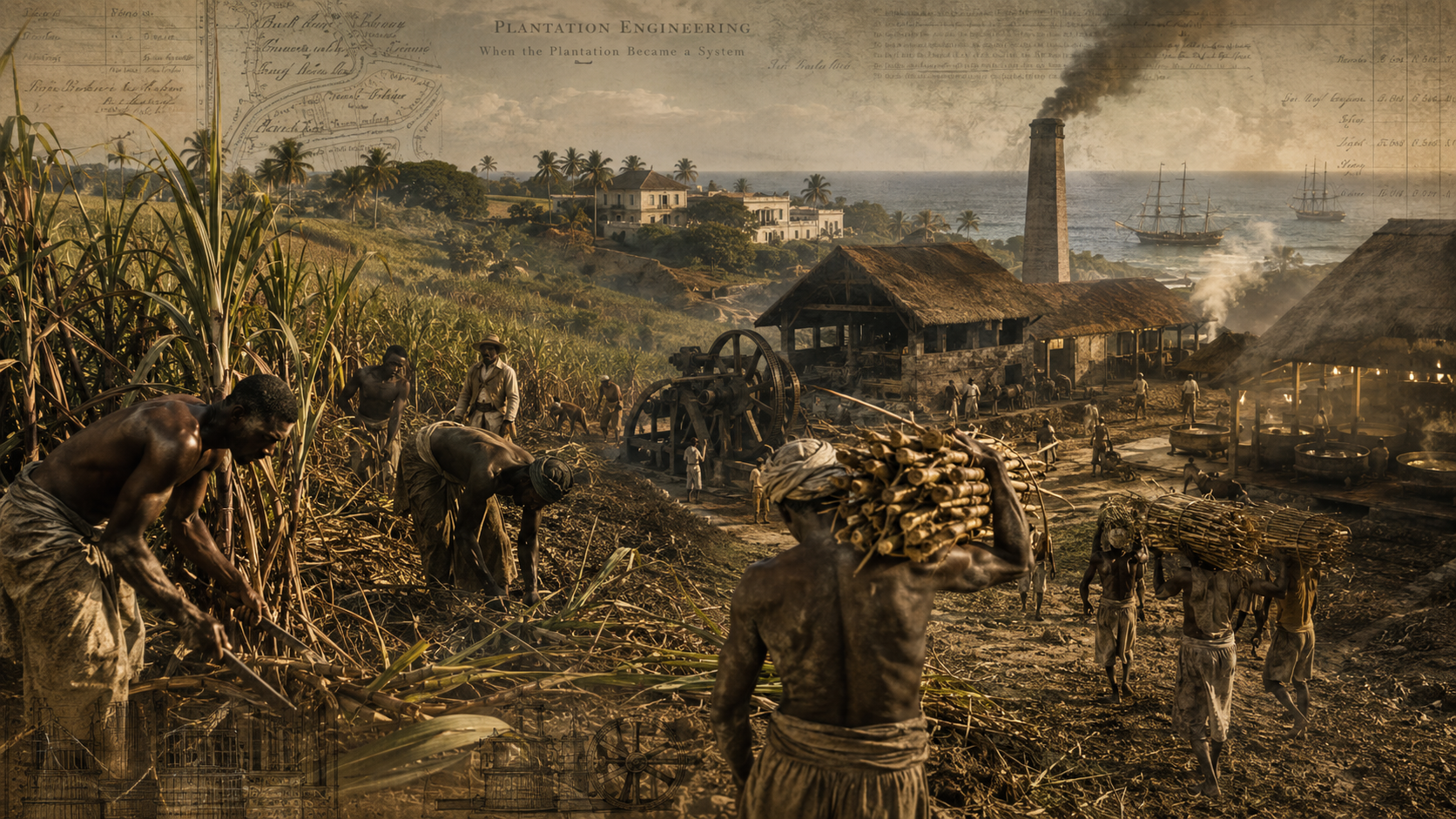
Plantation Engineering: When the Plantation Became a System
Updated July 4, 2026
The plantation was not simply a farm. It was one of the first great machines of the modern world.
Plantation engineering means the conversion of land, labor, violence, law, finance, race, and memory into a repeatable system of extraction. Sugar was the crop, but the crop was not the whole story. The real product was control.
In São Tomé, Barbados, Saint-Domingue, and the wider Atlantic world, plantation power learned how to organize land for export, force African labor into production, use law to protect ownership, use finance to move profit, and use racial categories to make exploitation visible, inheritable, and enforceable.
That is why the plantation matters beyond the history of slavery. It trained institutions.
It trained accounting.
It trained surveillance.
It trained racial law.
It trained in finance.
It trained the consumer to enjoy sweetness while ignoring the furnace that produced it.
The plantation did not need moral coherence. It needed procedure, repetition, enforcement, and profit. That is what made it dangerous. Cruelty became administrative.
Readers should keep watching this pattern, because plantation logic has not disappeared. It changed vocabulary. Whenever human life is organized as input, cost, risk, and replaceable labor, the old machine is whispering through new paperwork.
Critical Question: If the plantation helped train modern institutions to convert people into units of production, where do we still see that logic operating today?
Next Up: Resistance as Governance — when enslaved Africans did not merely run away, but built institutions under pressure.

What Is Unseen?
What is unseen is not that the plantation was brutal. That part is known, even when people try to soften it with museum language and plantation-tour wallpaper.
The unseen part is that the plantation was an institution-building machine.
It trained the modern world to turn land into inventory, African bodies into labor units, law into protection for property, violence into management, and memory into silence.
That is where power hides — not only in extraction, but in explanation.
The plantation survives whenever institutions describe human suffering as efficiency, profit, order, labor discipline, or market necessity.
So the critical question is not only: what happened on the plantation?
The deeper question is: what parts of the plantation still know how to speak through modern institutions?