

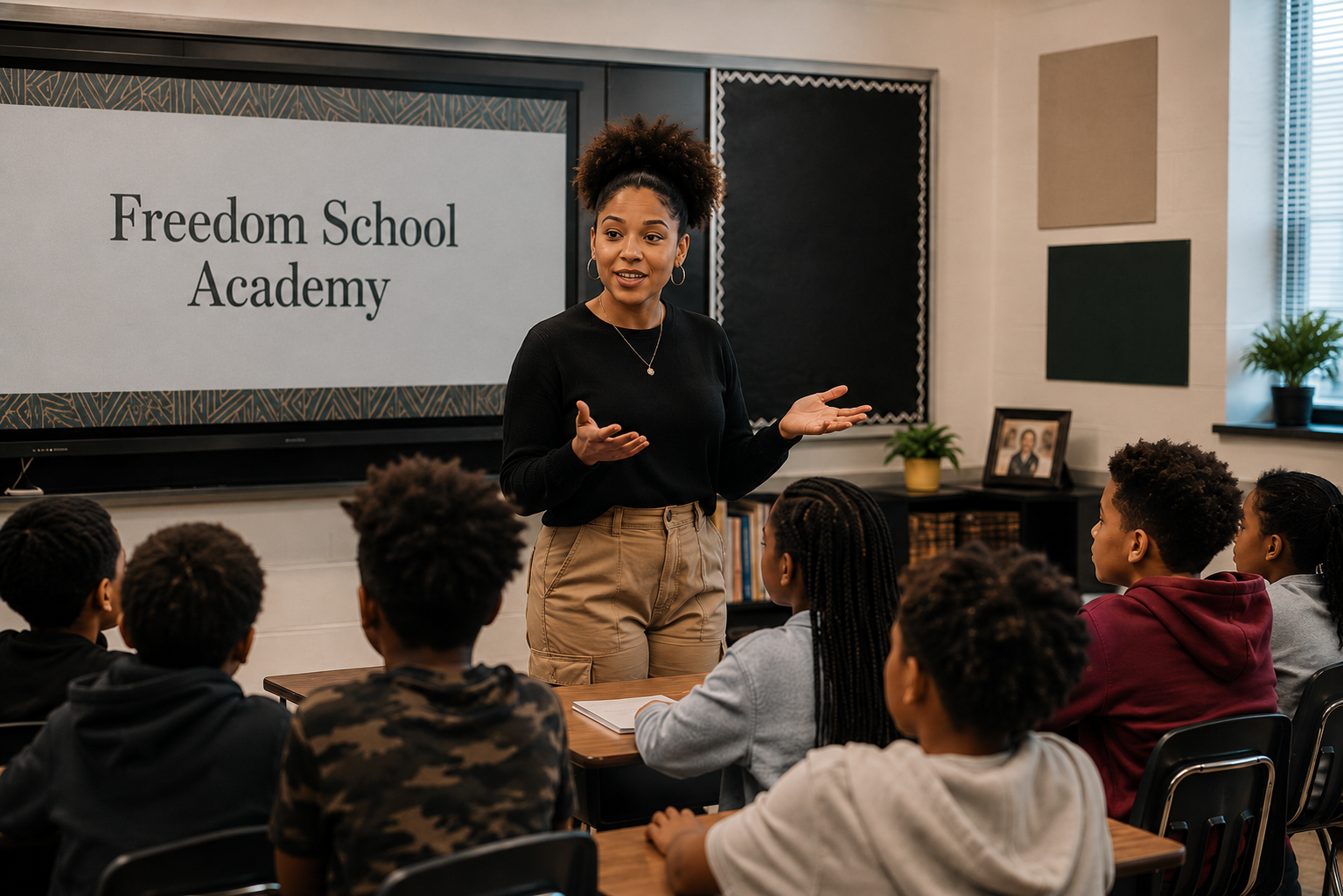
FSA Teacher Hub
Teachers welcome to the 2026-2027 school year. You can find resources for your Africana Studies here. Here you will find teacher-facing resources designed to help you teach money, civic power, African and Black historical understanding, and critical thinking with clarity, structure, and purpose.
Teachers looking for lessons on Africa, Black history, the African Diaspora, and Africana Studies can visit our dedicated Africana page here: https://www.freedomschoolacademy.com/africa-blackness.

Money
This section is being prepared for teachers who want to help students understand money as a life system, not just a personal habit. In many African ways of knowing, wealth has long been understood as something connected to community, stewardship, reciprocity, land, labor, family continuity, and collective well-being rather than individual accumulation alone. Students should be guided to see money not only as currency but as part of a larger network of relationships, responsibilities, survival, dignity, and future-building.
Teacher Summer Activity
This summer, teachers should spend one week observing and collecting real-world examples of how money shapes daily life, including spending, saving, debt, work, pricing, banking, and financial stress. Pay attention to how families, neighborhoods, churches, elders, small businesses, and community networks share resources, solve problems, and support one another during times of need. Use these observations to prepare future classroom discussions about responsibility, opportunity, collective care, economic access, and long-term financial stability across generations.


Investing
This section prepares teachers to introduce investing as a long-term system of planning, ownership, risk, and future security rather than a shortcut to wealth. Lessons will explore savings, stocks, retirement, compound growth, and how families and communities build stability across generations.
Teachers should also encourage students to think about investing beyond individual gain by considering responsibility to family, community support systems, shared resources, and long-term stewardship across generations. Students should examine how culture, history, trust, and access shape ideas about wealth, security, and opportunity.
Summer Activity
Spend one week observing how people talk about saving, risk, retirement, and “getting ahead.” Notice who students and families trust for financial advice and what opportunities seem available or limited.
Also observe examples of people supporting one another economically through shared caregiving, pooled resources, fundraising, informal lending, or community assistance. Consider how these practices help families and communities create stability over time.

Critical Thinking
We Teach With Clarity
Clarity means…
Clarity means we use plain language, honor lived experience, and teach for action, not just theory. Teachers should help students name what is happening, understand the systems around them, and connect classroom learning to real decisions in family, civic, financial, and community life.
Summer Critical Thinking Questions for Teachers
How can I explain money, civic power, responsibility, and opportunity in language students can understand without weakening the seriousness of the lesson?
What lived experiences are students already bringing into the room that can help them recognize systems, choices, consequences, and responsibility?
Teacher Reflection
Teacher Writing Prompt
Write a short reflection on what your students will need most in the years ahead: information, confidence, discipline, community memory, practical skills, or the ability to recognize systems before consequences arrive. Explain why.

Family Book Reads on Wealth, Power, and Truth
The Psychology of Money – Morgan Housel
The Color of Money – Mehrsa Baradaran
The Simple Path to Wealth – JL Collins
Get Good with Money – Tiffany Aliche

Audio and Video Resources
The Karen Hunter Show - The Color of Money Interview w/Mehrsa Baradaran
In Class with Carr, Episode 64 - Connecting Memorial Day and Black Wall Street
Roland Martin - The Fight for Reparations w/ Dr. Greg Carr
Brown Ambition Podcast – Smart, Black, and practical money moves.
NPR’s “Planet Money” (Selected Episodes) – Economy and money made simple.
Earn Your Leisure – Black entrepreneurs, generational wealth, and education.

Our Method
We help readers ask better questions:
What happened?
What system made it possible?
Who carries the institution?
Who benefits?
Who is burdened?
What repeats?
What responsibility follows?
“Intelligence plus character — that is the goal of true education.”