
The African Diaspora
The Caribbean Reparations Movement
Repair, Sovereignty, and Power Across the Black Diaspora
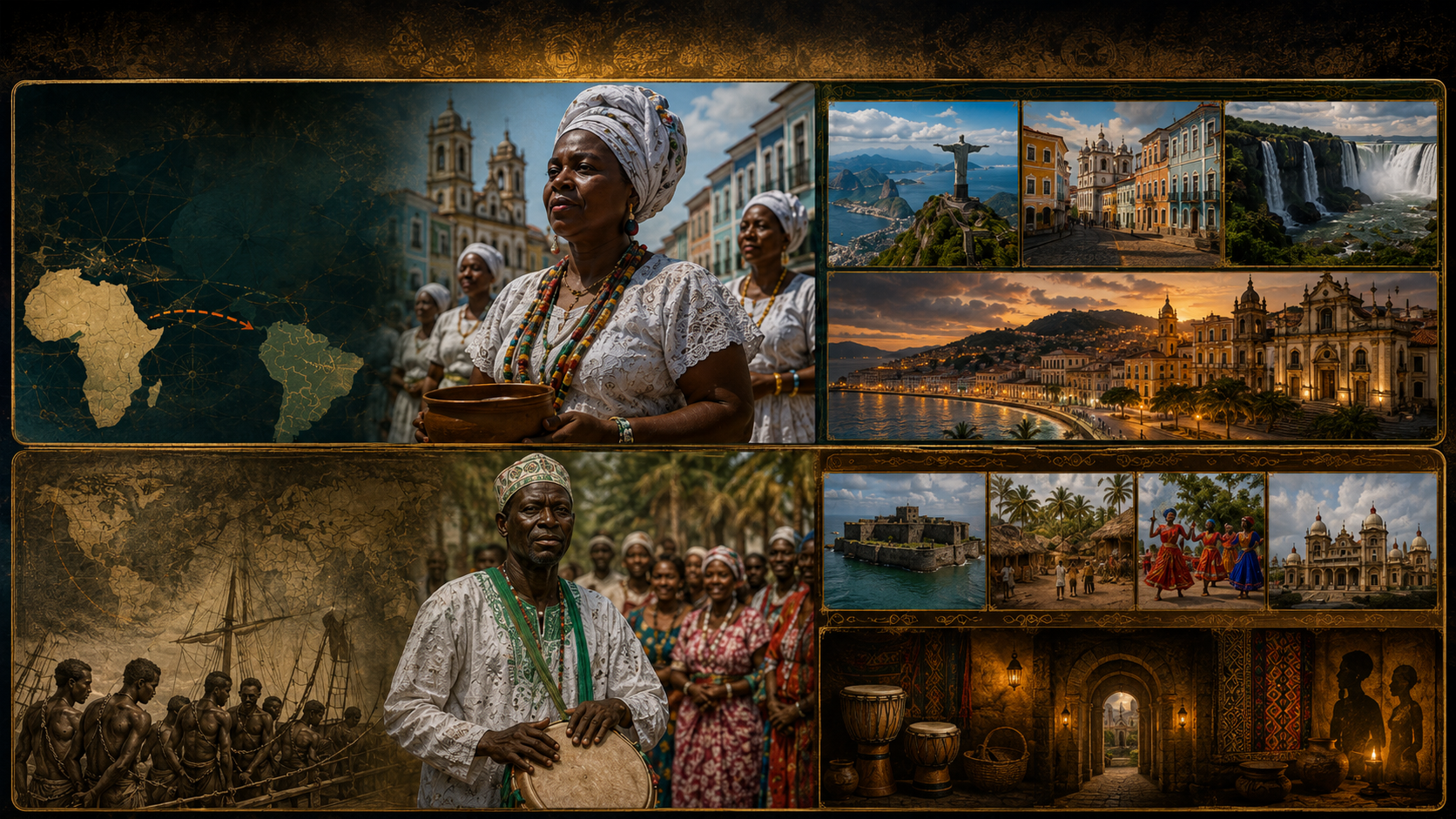
Caribbean leaders are redefining reparations as more than financial compensation. CARICOM’s revised Reparations Manifesto connects reparations for slavery and colonialism to debt, healthcare, education, economic development, cultural restoration, and political sovereignty.
The question is not simply what Britain owes. It is who controls Caribbean land, institutions, historical memory, and political futures after the formal empire ended. Colonialism did not disappear when flags changed. Its authority survived through courts, constitutions, financial systems, territorial governments, and patterns of foreign ownership.
For the Black Diaspora, the warning is clear: reparations without self-determination can leave the same structures that produced the injury managing its repair. Genuine repair requires money, but also truth, institutional power, land authority, cultural restoration, and the capacity of African-descended peoples to determine their own futures.
This is what Eric’s Caribbean Enslavement Corridor research helps reveal. The plantation was not merely a farm. It was a system carried by law, ports, banks, insurers, churches, militaries, schools, and imperial administration. Many of those institutional relationships changed form without surrendering their power.
What is unseen is the territorial afterlife of empire: colonial authority preserved inside modern governance, tourism, finance, and public memory. The next test is whether CARICOM can convert a moral claim into enforceable negotiations, coordinated diaspora pressure, and measurable institutional repair.
Black Iran and the Diaspora Hidden Along the Persian Gulf
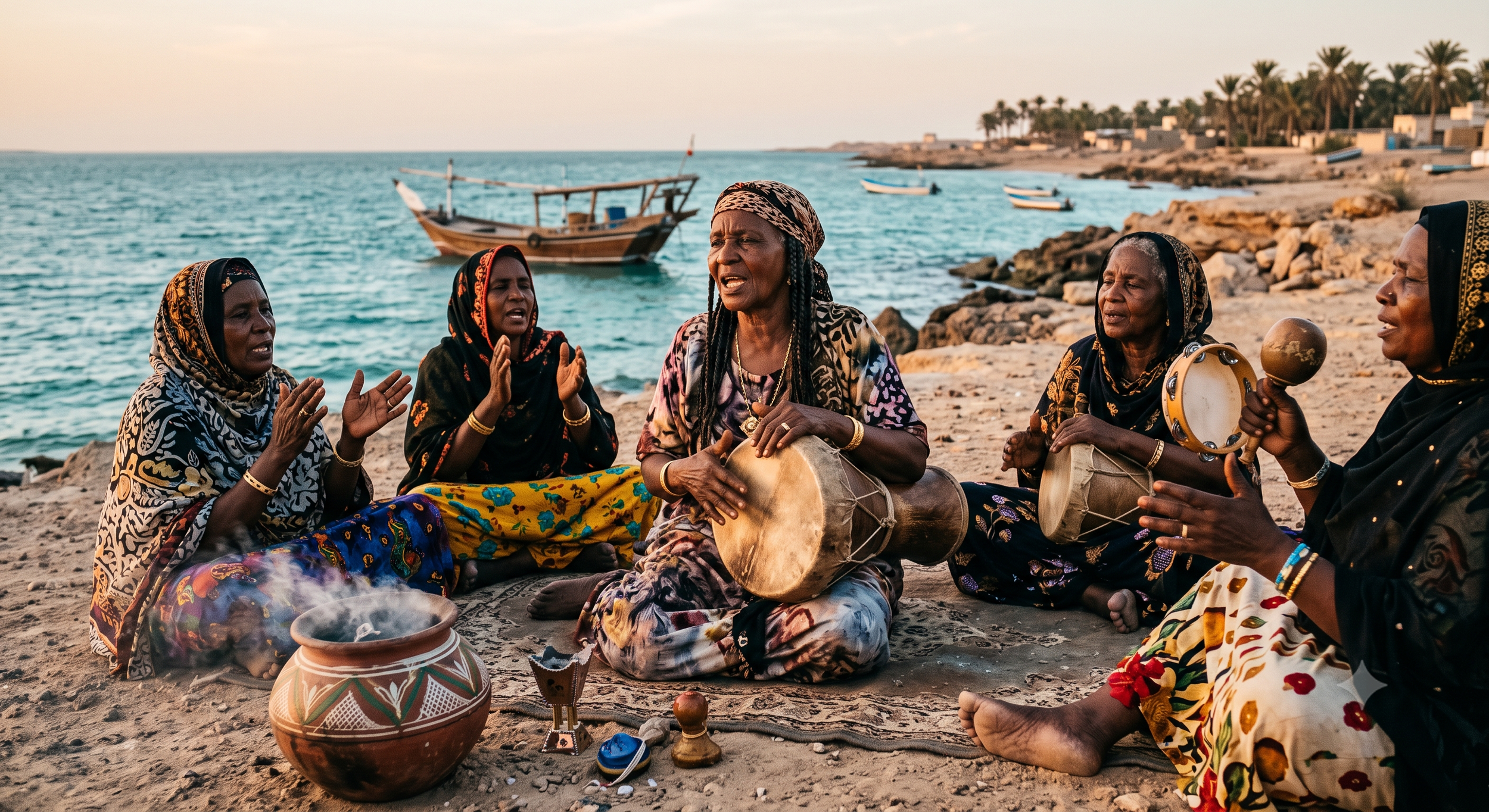
7.15.26 - The African Diaspora also lives in Iran, although most maps of the Black world leave it out. Afro-Iranians have lived for generations along Iran’s southern coast, particularly in Hormozgan, Bushehr, Khuzestan, and Sistan and Baluchestan.
Their history belongs to the Indian Ocean world. For centuries, East African sailors, merchants, laborers, religious figures, and enslaved people moved between the Swahili Coast, Arabian Peninsula, Persian Gulf, and South Asia. Many came from regions now called Tanzania, Kenya, Mozambique, and Zanzibar. Some arrived voluntarily. Others were trafficked into domestic service, agriculture, pearl diving, and maritime labor. Iran did not legally abolish slavery until 1929.
Afro-Iranian culture still carries this history. Music, dance, healing ceremonies, oral memory, maritime traditions, and religious practices preserve connections to East Africa even where written records remain thin. The zar healing tradition, found across parts of northeastern Africa and the Persian Gulf, is one example of memory traveling farther than official history cared to follow.
Yet Black Iranians are frequently absent from Iran’s national story. They may identify as Persian, Arab, or Baloch while also carrying African ancestry. That complexity makes them easy for institutions to overlook. Census categories, schools, museums, archives, and public media can make a people statistically invisible without making them historically absent. A rather efficient trick: erase the category, then wonder where everybody went.
Their story expands the diaspora beyond the familiar Atlantic triangle. African dispersal also followed monsoon winds, commercial ports, imperial households, pilgrimage routes, and maritime labor corridors across the Indian Ocean.
What is unseen? The Indian Ocean was not a side road in African history. It was another major corridor through which African labor, culture, memory, and survival reshaped the world. The institutions hiding this diaspora are the same ones responsible for recovering it: schools, censuses, universities, museums, archives, and national media.
Black Europe and the New African Diaspora
Black Europe remains one of the least examined parts of the African Diaspora because European narratives often treat Black presence as recent, temporary, or tied only to immigration. That framing hides a longer history. African-descended people have lived, worked, studied, fought, prayed, organized, and built communities across Europe through trade, empire, enslavement, military service, education, religion, labor migration, asylum, and postcolonial citizenship.
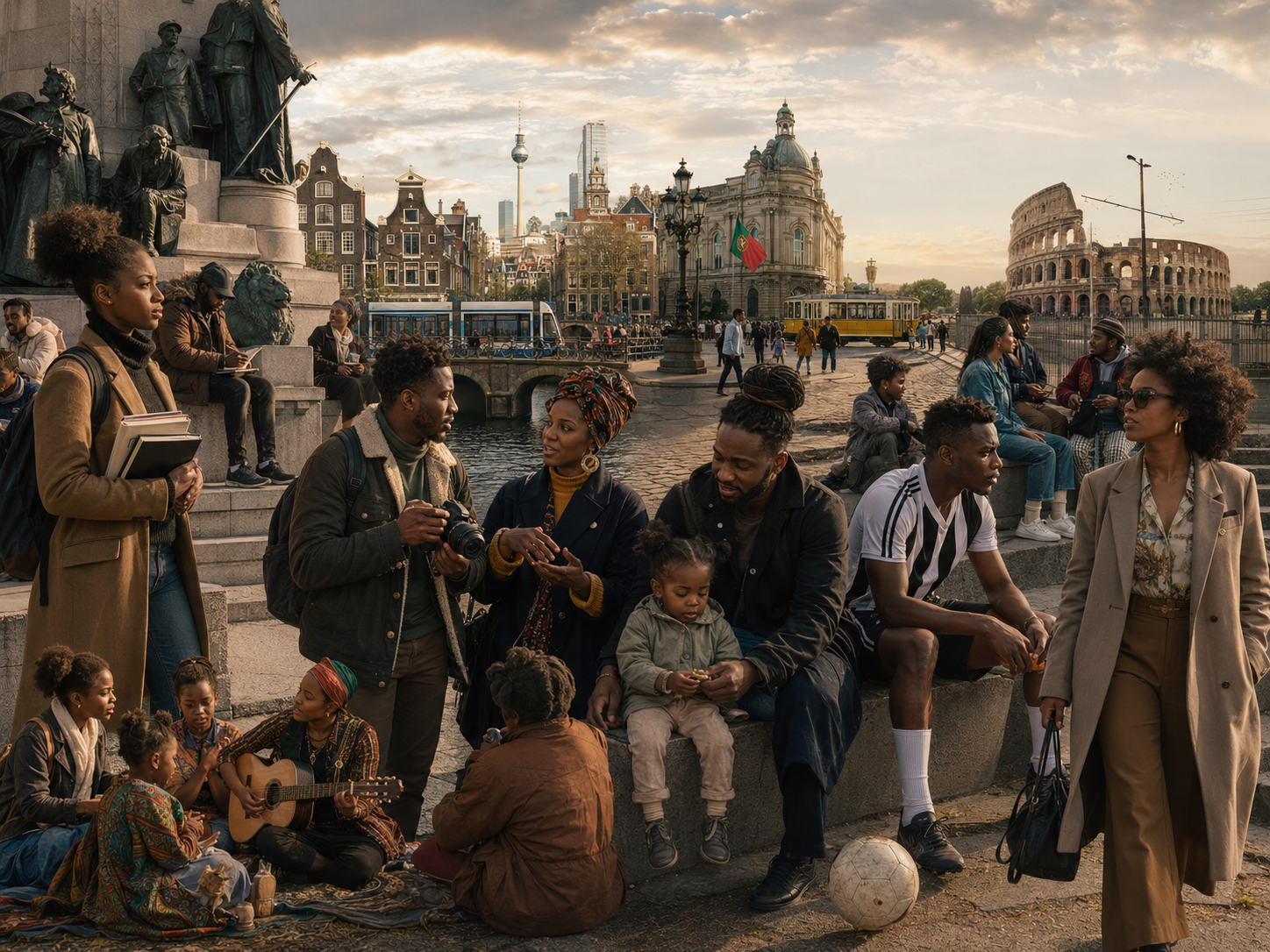
Their presence is visible across Britain, France, Portugal, Spain, the Netherlands, Belgium, Germany, Italy, Ireland, Sweden, Norway, Denmark, Switzerland, Austria, Greece, and other parts of Europe where African-descended communities continue to grow. In Britain, France, Portugal, Spain, the Netherlands, Belgium, Germany, and Italy, Black communities developed through both imperial expansion and resistance to it. More recent migration from West, Central, East, and North Africa has added new layers of language, religion, class, memory, and identity.
Black Europe carries a special burden. Many communities live inside nations that built wealth and global influence through colonial extraction but still resist full acknowledgment of empire’s human cost. The old colony becomes the new “integration problem.” Same furniture, different upholstery.
The issues are structural: contested citizenship, racial profiling, over-policing, school exclusion, housing discrimination, labor market barriers, restrictive asylum systems, weak political representation, and public memory systems that celebrate empire while minimizing colonial violence, slavery, and racial exploitation.
Still, Black Europe is not only struggle. It is music, literature, football, scholarship, journalism, fashion, religion, protest, family, and community-building. Cities such as London, Paris, Amsterdam, Brussels, Lisbon, Berlin, Stockholm, Copenhagen, and Rome have become sites where African and Caribbean communities build culture, preserve memory, and reshape European identity.
Where state institutions offer symbolism without repair, Black Europeans have built their own churches, cultural associations, advocacy groups, independent media, educational projects, and grassroots movements.
The deeper story is this: Black Europe forces Europe to answer whether it can remember honestly what it built, whom it extracted from, and who now belongs inside the house empire helped construct.