
Money, Memory, and the Vote
The Conversation at My Dinner Table
Last week, I attended a rally for Angie Nixon. Something troubled me almost immediately. Looking around, I saw fewer than a handful of people I would have guessed were younger than 35. My brother-in-law noticed it, too. Where were the young people? It was only an observation, not a scientific measurement of voting behavior, but it unsettled me. Here was a political gathering concerned with the future, yet so few of the people who would live longest with that future appeared to be present.
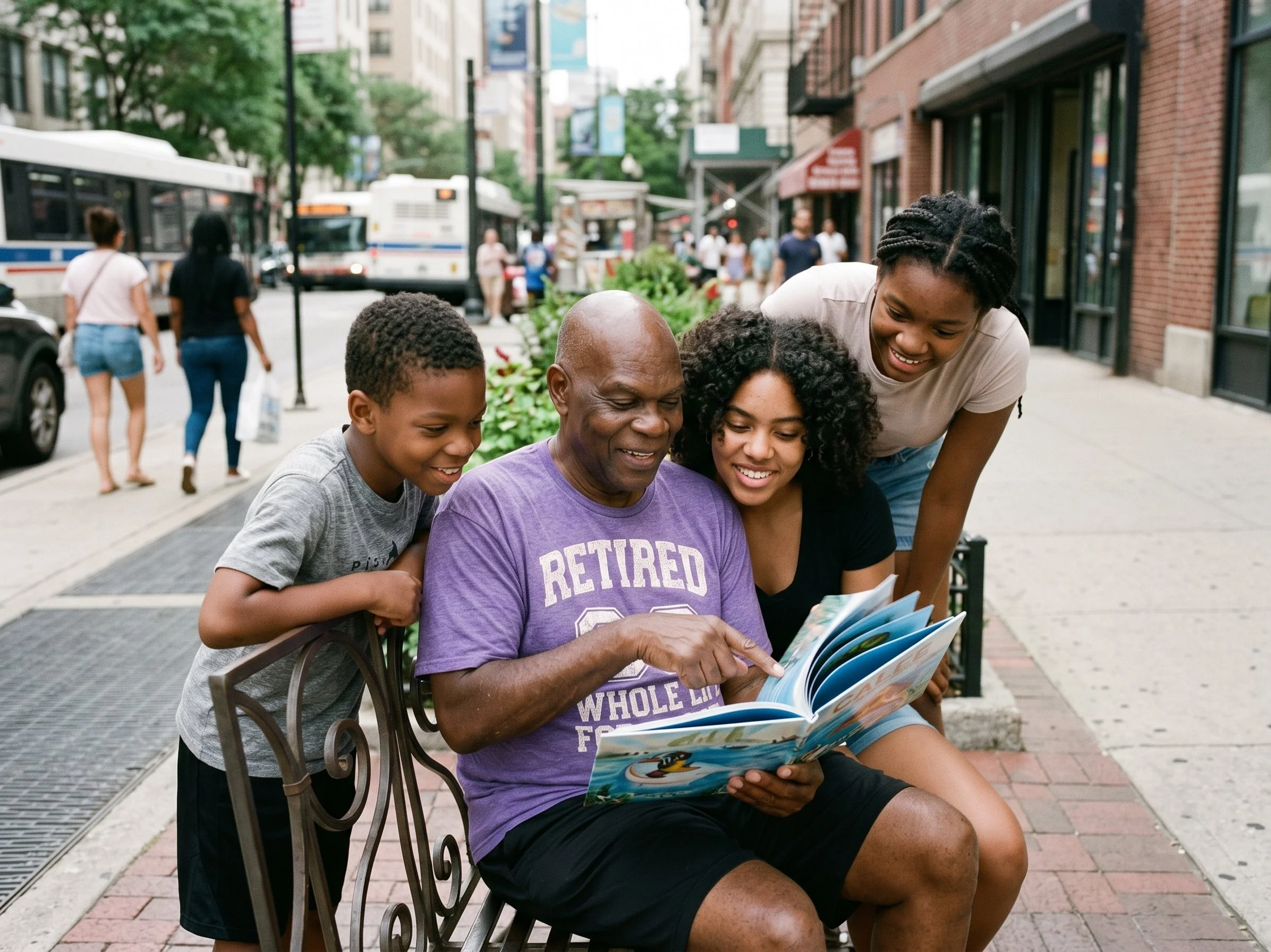
The conversation followed us home, where many of my stories begin: around the dinner table. My stepson and his uncle discussed why young people weren’t showing up. When Bernie Sanders came up, my stepson suggested younger people considered him just another old man. The conversation moved toward term limits and whether older politicians should step aside. I was bothered by the ease with which age seemed to become a substitute for judging competence. I turn 65 tomorrow. I am proud of my years, not because age guarantees wisdom, but because I carry memories of struggles that shaped how I understand this country.
“Memory is not simply what an older generation remembers. It is what a younger generation is given the opportunity to understand.”
When the Memory Stops Traveling
Later, listening to Shawnee Renee on SiriusXM’s Urban View, I heard the familiar argument that we need to stop finger-wagging at young people and meet them where they are. I agree. But meeting people where they are cannot mean leaving them there. We must call one another higher, and that requires more than demanding participation without explaining what participation has meant.
For Black Americans, voting was never merely an Election Day ritual. It was connected to citizenship, education, employment, public resources, and protection under law. The struggle for voting rights was also a struggle over who possessed political power and who could influence the institutions governing everyday life.
Yet my generation must confront its own responsibility. Did we adequately transmit that history, or did we assume younger people would understand why we vote simply because we understood it? Families, schools, churches, and community organizations once carried much of that knowledge. We should examine how effectively those institutions perform that responsibility today.
Researchers at Tufts University’s CIRCLE estimate that 47 percent of eligible Americans ages 18–29 voted in the 2024 presidential election, compared with 50 percent in 2020. That does not explain every young person’s decision. But it reminds us that participation deserves serious examination rather than assumptions about an entire generation.
Who Are We to One Another?
During my studies in Knubia with Dr. Greg Carr, I returned to a question that continues to shape my thinking: Who are we to one another?
African Ways of Knowing invites us to understand people through their relationships with place, memory, institutions, power, responsibility, and future generations. Knowledge is not simply something an individual acquires. It is also something communities preserve, challenge, interpret, and transmit.
This places obligations on both generations. Older people cannot demand respect while neglecting their responsibility to teach and listen. Younger people can question inherited ideas without dismissing the experiences that produced them. Neither generation possesses all the answers, and neither owns the future alone.
“We do not inherit history merely to honor what others endured. We inherit knowledge that helps us recognize what must be protected, questioned, and changed.”
But that obligation cannot remain philosophical. It must reach into the material conditions governing people’s lives.
The Money We Live On
I hear younger adults talking about housing costs, groceries, salaries, student debt, and the difficulty of establishing independent households. These concerns deserve more than lectures about personal responsibility. That sounds suspiciously like the faux-pau “pull yourself up by your bootstraps “ fallacious argument. We are required to examine what people earn, what necessities cost, and what remains after those necessities are paid.
In the second quarter of 2026, median weekly earnings for full-time workers ages 25–34 were approximately $1,160 — about $5,027 monthly before taxes. Zillow reported typical national asking rent of $1,932 in September 2026. Using those separate national benchmarks, rent alone would consume more than 38 percent of gross earnings.
Before taxes. Before groceries, transportation, insurance, healthcare, debt payments, and retirement savings.
USDA’s August 2026 Thrifty Food Plan estimated approximately $317 monthly for groceries for a man ages 20–50, assuming meals prepared at home. These figures do not describe one actual household, and costs vary considerably by family and location. But together they reveal the pressure that can accompany financial independence.
What happens when a person works full-time but struggles to establish a household? What happens to the possibility of homeownership, emergency savings, or investments? And what happens to generational wealth when one generation struggles to accumulate anything substantial enough to pass forward?
Financial security is not simply what appears on a paycheck. It is also what remains after the ordinary cost of living has been paid.
When Washington Enters the Grocery Store Look Out
Government decisions frequently arrive wrapped in language far removed from everyday life: appropriations, eligibility requirements, tax provisions, and budget baselines. Families encounter their consequences differently — in grocery budgets, medical expenses, taxes, and the resources available to build financial stability.
Consider the federal reconciliation law enacted during President Trump’s administration in 2025. The Congressional Budget Office estimated that its provisions would generally increase resources for middle- and higher-income households while reducing resources for households toward the bottom of the income distribution during 2026–2034. That distinction matters because the benefits and burdens are not distributed evenly.
The law changed the Supplemental Nutrition Assistance Program, or SNAP. CBO projected approximately $187 billion in reduced federal SNAP-related spending over 2025–2034 relative to its previous baseline. Expanded work requirements and eligibility restrictions contribute to that projection. This is not $187 billion already removed from families’ bank accounts. But affected households receiving less food assistance may have to devote more of their available income to groceries.
Medicaid changes provide another example. Eligibility and enrollment provisions can affect access to coverage, exposing some households to additional financial risks. Tax provisions may benefit other households. Understanding the law requires examining both effects and recognizing that projections are not the same as realized outcomes.
No single administration determines every grocery price, salary, rent payment, or medical bill. Markets, employers, state governments, monetary policy, and earlier decisions matter. But complexity does not erase government responsibility. It makes understanding those decisions more important.
“Government policy does not stop at Congress’s doors. Its consequences can reach the grocery cart, the rent payment, the doctor’s office, and the wealth a family hopes to leave behind.”
What We Leave Behind
I began this essay frustrated by the absence of younger people at a political rally. I return to a larger concern about what we know, what we teach, and what we owe one another.
Historical memory without contemporary understanding can become nostalgia. Economic frustration without institutional understanding can leave people uncertain about how decisions shaping their lives are made.
Older generations must transmit knowledge without dismissing younger people’s experiences. Younger generations bring questions that deserve serious answers. We share a responsibility to understand the institutions shaping our lives and the consequences our decisions leave behind.
That is what African Ways of Knowing brings me back to: We inherit conditions we did not create, make choices within them, and leave consequences for people who follow.
The question is not simply whether we remember.
It is what we do with what we know. Vote for your own pocketbook and the pockets of your descendants.
Three Questions for Readers
1. What historical knowledge about voting, political power, and economic opportunity did you inherit, and what have you passed forward?
2. How well do you understand the government decisions influencing your wages, housing costs, grocery bills, healthcare, and ability to build wealth?
3. What do younger and older generations owe one another in building an economically secure and historically informed future?
Sources and References
3. Zillow Research. September 2026 Rent Report. October 15, 2026.
5. Congressional Budget Office. Distributional Effects of Public Law 119–21. August 11, 2025.
6. Congressional Budget Office. The Budget and Economic Outlook: 2026 to 2036. February 2026.
7. Carr, Greg. In Class with Carr, Episode 344, “Intergenerational Warriors,” October 10, 2026. Consulted through the author’s study notes on African historical memory, knowledge transmission, governance, and intergenerational responsibility.
8. Steele, Nathaniel. The Scaffolding of the American Vote: How Race, Fear, and Structure Still Decide American Power. TruthLens Analysis LLC, 2026.
9. Steele, Nathaniel. Freedom Ain’t Just a Feeling: Reclaiming Wealth, Rest, and Legacy in Black America. TruthLens Analysis LLC, 2025.
10. Steele, Nathaniel. Freedom Is Not a Feeling. It Is a Skill. Medium, May 19, 2026.